
Whole Wheat Flour Tips
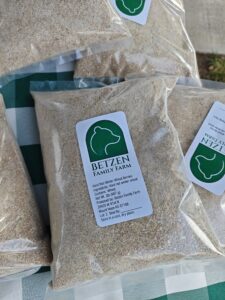 Practical tips for baking with 100% stone-ground hard red winter wheat (HRWW).
If you’re used to baking with store-bought white flour, your first loaf with stone-ground whole wheat can be a surprise. The same recipe may give you dough that feels different and bread that turns out heavier than you expected.
Whole-wheat flour keeps the bran and germ that refined white flour leaves behind. The bran absorbs water, and its sharp edges can interrupt or damage the stretchy gluten network that holds the dough’s rising bubbles. That makes it harder for the loaf to trap gas and rise as high.
A little extra attention to water, resting, and dough development can make a big difference. You can bake a soft, well-risen loaf while keeping all the whole-grain flavor of hard red winter wheat. Store-bought whole-wheat flour shares these challenges, too; the wheat and how finely it is milled also affect the result.
Their sons Davey, Donny, and Matt carried on the work as Betzen Brothers. Davey’s son Neil later joined them. After Donny retired and Davey passed away, Neil and Matt continued farming together.
Today, more of the family is helping shape what comes next.
Start with these three changes
- Give the flour time to absorb water.
- Keep the dough soft instead of adding flour until it feels dry.
- Bake when the shaped loaf is ready, before it loses its strength.
Rest the flour before kneading
Mix your flour with the recipe’s water until no dry pockets remain, cover, and rest for 20–30 minutes. Then add the remaining ingredients and knead. Reserve a little of the measured water if needed to dissolve active dry yeast. This short rest lets the whole-wheat flour hydrate before you judge the dough.
If you have already mixed in the yeast, the rest counts toward fermentation time. Avoid turning a short hydration rest into an unplanned long rise.
Use dough feel to adjust the water
Whole-grain flour absorbs more water than refined flour, and different grinds and wheat lots behave differently. Weigh your ingredients and begin with a whole-wheat recipe. After the rest, aim for soft, pliable dough that feels tacky, rather than stiff or crumbly.
If it is tight and dry, work in water a teaspoon at a time. For a 500 g flour batch, each additional 5 g water changes hydration by one percentage point. Record what works for your flour. More water is helpful only while the dough can still hold its shape.
Use lightly dampened or oiled hands and a dough scraper to manage sticking. Repeated handfuls of bench flour can quietly turn a soft loaf into a heavy one.
Keep the whole grain, develop the structure
If you mill at home, choose a fine bread-flour setting within your mill’s instructions. A coarse grind may need more time to soften. Do not discard sifted bran to chase a lighter texture: keeping all the bran and germ is part of keeping the flour whole grain.
Knead or use the folds specified in your recipe until the dough becomes more elastic and cohesive. A small piece should stretch before tearing; bran can interrupt a perfectly clear “windowpane.” If the dough tears immediately, give it a short rest and work it again. Follow your mixer’s dough-speed and capacity limits.
Watch the rise, not just the clock
Use active yeast or a reliably vigorous starter. Keep dough comfortably warm, rather than hot, and follow the recipe’s expansion cues. A straight-sided container makes the first rise easier to judge.
For the final rise, look for a puffy loaf that still holds its shape. A gentle poke with a floured finger that springs back slowly and leaves a shallow dent is one useful clue. A quick rebound often means more time is needed; a fragile loaf that sinks may have gone too far. Read the poke alongside the loaf’s appearance, especially with very wet or cold dough.
More yeast or a longer rise will not repair weak dough. Preheat the oven before the loaf finishes proofing.
Choose a soft sandwich-loaf approach
A loaf pan supports the dough as it rises. Use the size called for in your recipe; an oversized pan can make a sound loaf look short. For a tender sandwich crumb, choose a 100% whole-wheat recipe that includes oil or butter, and optionally milk or a modest amount of honey. Enrichment softens the bite, but does not replace good dough development.
Follow the recipe’s oven temperature and doneness cues. Tent with foil if the top browns early. Turn the baked loaf out onto a rack and cool completely before slicing; cutting hot bread can leave a gummy-looking crumb.
For extra softness, try tangzhong
Tangzhong is a cooked paste made from a small portion of the flour and liquid. It helps bread retain moisture and stay soft. Use the same whole HRWW flour in the paste to keep the flour 100% HRWW.
As an example of the paste proportions, 25 g flour and 125 g water make a 1:5 paste for a dough containing 500 g total flour. Whisk over gentle heat until thick, then cool before mixing. Those amounts belong to the recipe’s totals: the paste uses 25 g of the 500 g flour, leaving 475 g for the main dough.
Start with a tested whole-wheat tangzhong formula or follow a conversion guide for the total liquid. Simply cooking away part of an already dry recipe’s water may make it stiffer. Tangzhong is mainly a softness and keeping-quality technique, not a guaranteed increase in loaf height.
What to adjust next time
| What you notice | What to try |
|---|---|
| Dry, tight crumb | Rest before kneading, add a little more water if needed, and reduce bench flour. |
| Dense loaf with little rise | Check yeast or starter activity, dough strength, and whether proofing was cut short. |
| Rises, then collapses | Shorten the final proof; also check for weak dough or more water than it can support. |
| Gummy center | Check baking doneness and let the loaf cool completely before cutting. |
| Good rise, firm bite | Try an enriched whole-wheat formula or a tested tangzhong method. |
Your next loaf: change one thing
Keep the same recipe and add the 20–30 minute hydration rest first. Record flour weight, water weight, dough feel, and rise. Adjust water on the next bake if needed. One change at a time makes it easier to learn what your flour needs.
Keeping it 100% HRWW: use whole HRWW for every flour addition, including a sourdough starter or cooked paste. These tips require no white flour, removed bran, or added vital wheat gluten.